Share This Story
Do you struggle to say “no” to the people you love, or feel like you give too much of yourself or your time to someone who drains your energy? These situations might indicate that you need to set some boundaries in your life, and there’s a healthy, kind way to approach setting boundaries that will safeguard your mind, heart, and body.
While it may feel like a challenge to set boundaries, especially with those you love, setting healthy boundaries is a crucial skill that will help promote higher-quality relationships with those you interact with. In this post, we’ll explore the different types of boundaries you can set and provide tips to help you communicate your preferences to those around you.
What Are Healthy Boundaries?
We often consider boundaries a physical barrier, such as a fence or a painted line on the ground, that separates two different areas. Healthy boundaries share the same concept but without the physical markings of a barrier. They’re the invisible limits and preferences that help protect your mental and physical well-being.
Boundaries are about communication: they tell people your needs and how you want to be treated. And the beauty of boundaries is that you can set them according to what’s right for you. You get to choose how much time and effort goes into each circumstance, and you get to create a space where you feel safe, supported, and empowered to nurture your relationships. You can set healthy boundaries with anyone—family, friends, peers, and even strangers—and depending on your level of comfort, these boundaries can vary from person to person.
What Are the Different Types of Boundaries?
Boundaries can be understood through many different perspectives, but to simplify things, let’s break them down into five categories that impact various aspects of your well-being.
Mental Boundaries
Do you tend to agree with other people’s opinions or beliefs so you don’t get judged by others or feel pressured to disagree and voice your own opinion?
Mental boundaries help you safeguard your values, thoughts, and beliefs. This includes the topics you choose to engage in conversation about. These boundaries act as a filter, protecting you from negativity while allowing you to share your unique perspective through conversation.

Examples:
“Thanks for inviting me on this trip, but I need to take some time for myself to recharge this weekend.”
“I understand you feel strongly about this, but I don’t share the same sentiment.”
⭐ PRO TIP
The Power of Saying “No”
It’s hard to politely decline someone’s request. Saying “no” is a much more difficult thing to do when you’re saying it to family, friends, or coworkers. Sometimes the best thing to do is to practice saying it in situations that don’t involve people close to you and gradually transitioning to peers, friends, and family when you feel more confident.
Emotional Boundaries
Is there someone who asks too many personal questions about your life?
Emotional boundaries define how much emotional energy you’re comfortable giving and receiving in a relationship. They also clarify how much personal information you feel comfortable sharing with others.

Examples:
“We should take a break from this argument to calm ourselves down. Let’s revisit this conversation after a few minutes when we’re both able to communicate without yelling at each other.”
“I work in San Francisco but live far away from the city with my partner.”
Physical Boundaries
Do you feel uncomfortable when people ask you for a hug or a handshake?
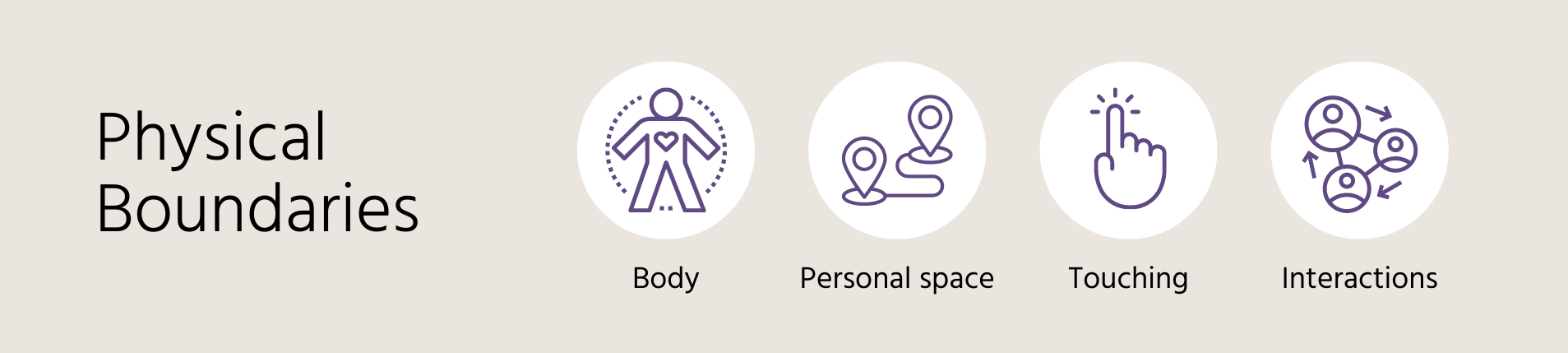
Physical boundaries establish a safe zone around your body and personal space. These boundaries communicate your preferences for physical touching and interactions.
Examples:
“I’d prefer to fist bump instead of shake hands.”
“Do you mind scooting over a bit so we can both sit comfortably?”
Material Boundaries
Do you feel compelled to say “yes” when someone constantly borrows your clothes without taking care of your items or returning them on time?
Material boundaries help you manage your finances and possessions responsibly. They determine how you share and handle your money, belongings, and other assets.

Examples:
“You can borrow my jacket but make sure you return it right after lunch.”
“I don’t think that lending you more money is the right solution. Let’s think of other ways I can help you out.”
Time Boundaries
Do you agree to engage with people or activities, even if you know you’ll feel overwhelmed or stressed because of it at a later time?
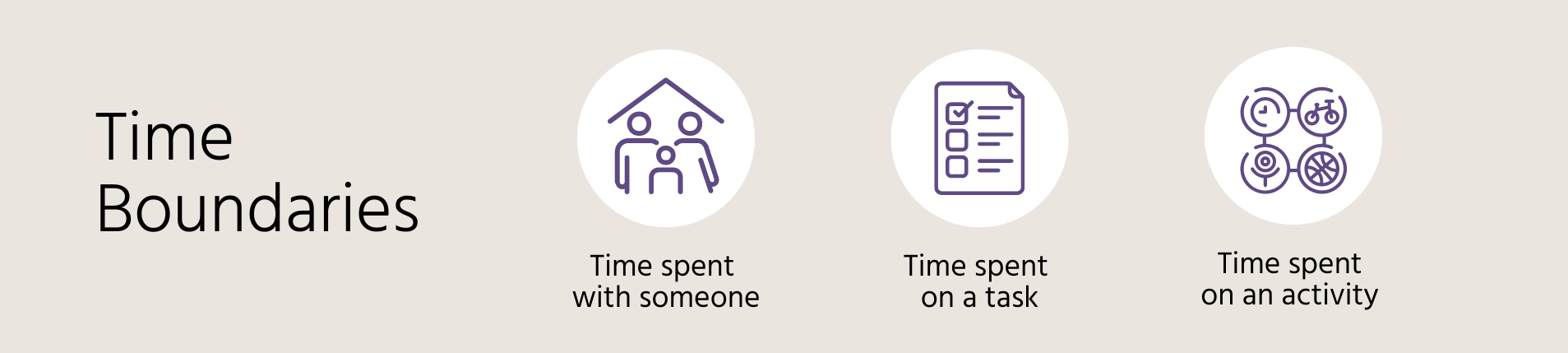
Time boundaries are all about managing your most valuable resource: your time. They help you limit how much time you’re willing to dedicate to someone, a task, or a specific activity.
Examples:
“I love spending time with you, but I need to get home before 8 to put the kids to bed.”
“My work schedule is pretty busy this week. Maybe we could grab dinner next week instead?”
Building healthy boundaries may feel a little awkward at first, especially if you’re not used to prioritizing your needs. Be patient with yourself and practice how you’ll communicate your limits. Remember that setting healthy boundaries is a two-way street. The key is to communicate kindly and respect the boundaries that other people have set. These boundaries will help shape your interactions and create a foundation to help your relationships flourish.